
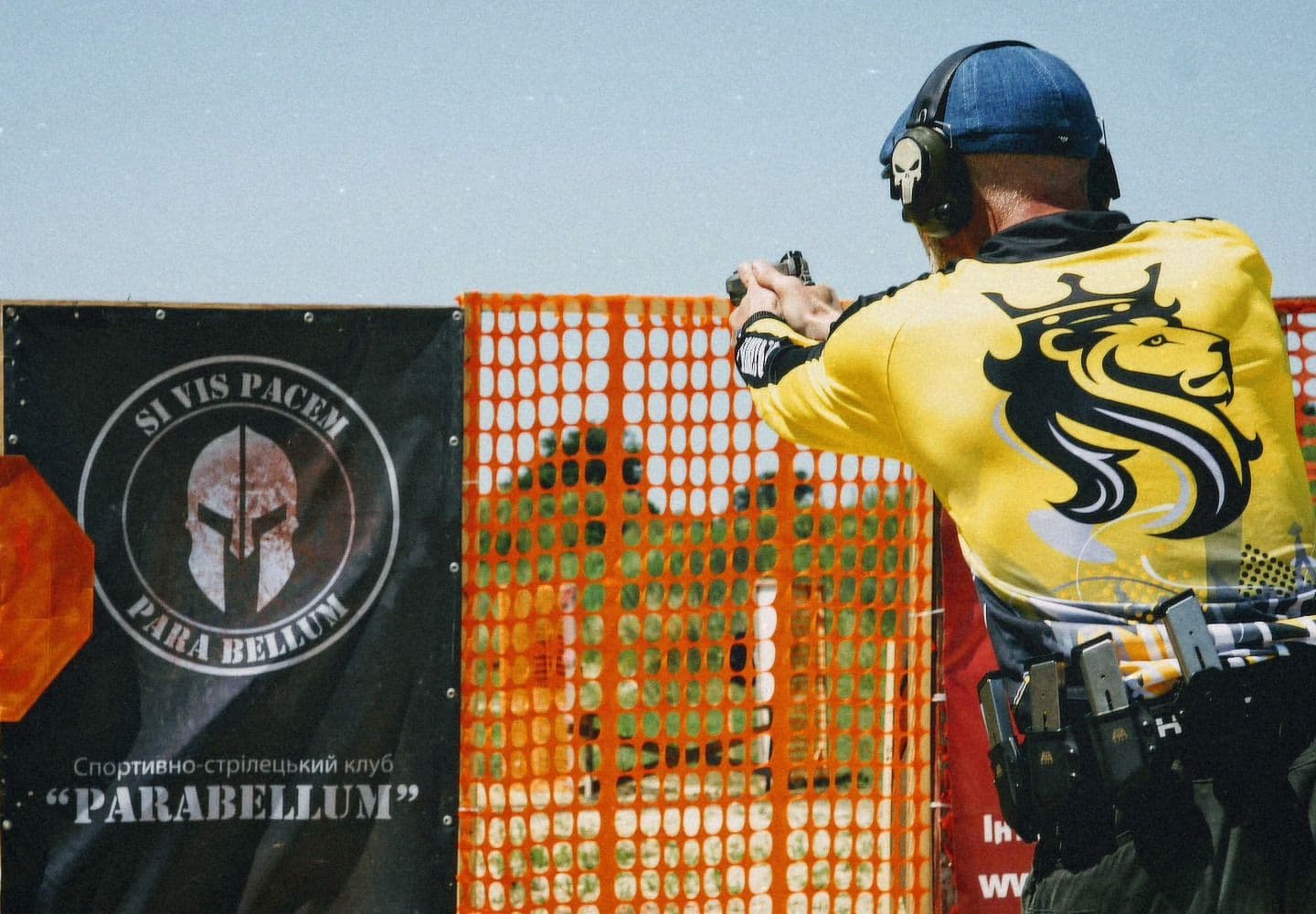
Ever seen a video of a shooter running between positions and clearing ten targets in a few seconds? Practical shooting really does look nothing like calm shooting from a single spot. Here is how it works, how points are scored, and where it makes sense to start if you have never set foot on a range.
What kind of sport is it
Practical shooting is a competition built around stages: you move through a course, hit several targets from different positions, and do it both fast and accurately. The International Practical Shooting Confederation, IPSC, was founded in 1976 at a conference in Columbia, Missouri. Its Latin motto is Diligentia, Vis, Celeritas: accuracy, power, speed. Today IPSC includes more than a hundred countries and regions, Ukraine among them.
How the result is calculated
The key term is the hit factor. It is the points for your hits, minus penalties, divided by the time you took on the stage. The winner of a stage gets all the points available for it, and everyone else gets a share in proportion to their hit factor compared with the best one.
That is why neither raw speed nor perfect accuracy at a slow pace wins on its own. The winner is whoever finds the balance. It is also why practical shooting teaches control so well: rushing without accuracy wipes out the result.
Divisions: keeping the contest fair
Competitors are split into divisions by firearm and equipment, for example Production or Open. Each has its own requirements for the pistol, so a shooter with a standard factory firearm is not ranked alongside someone whose firearm is heavily modified. The exact requirements change along with the rules, so before any match check the current IPSC rulebook or the rules of that particular competition.
Why not start with movement
Moving with a firearm, working at speed, and engaging several targets all require safe handling and a stable grip that are already second nature. So the sensible path starts with the basics: safe handling, stance, grip, trigger control. You learn all of this in a regular session, on a lane where you stand still and an instructor is right beside you. At matches a range officer watches every competitor, and a safety violation can end in disqualification.
Where to start
- Your first session. How it goes and what to bring is covered in our article about your first time at a shooting range.
- Trigger and grip. These are what separate a lucky hit from a consistent one. We break down a typical mistake in the article on shots going low and left.
- A word with an instructor. The instructors page lists Vitalii Obleshchuk as a senior practical shooting coach at the “Parabellum” shooting club and a national category judge. If this direction interests you, mention it when you book.
- A calm pace. Accuracy first, speed comes later.
Practical shooting does not begin with running between positions. It begins with one accurate shot. Once that shot comes out consistently, you can start thinking about stages and matches.