
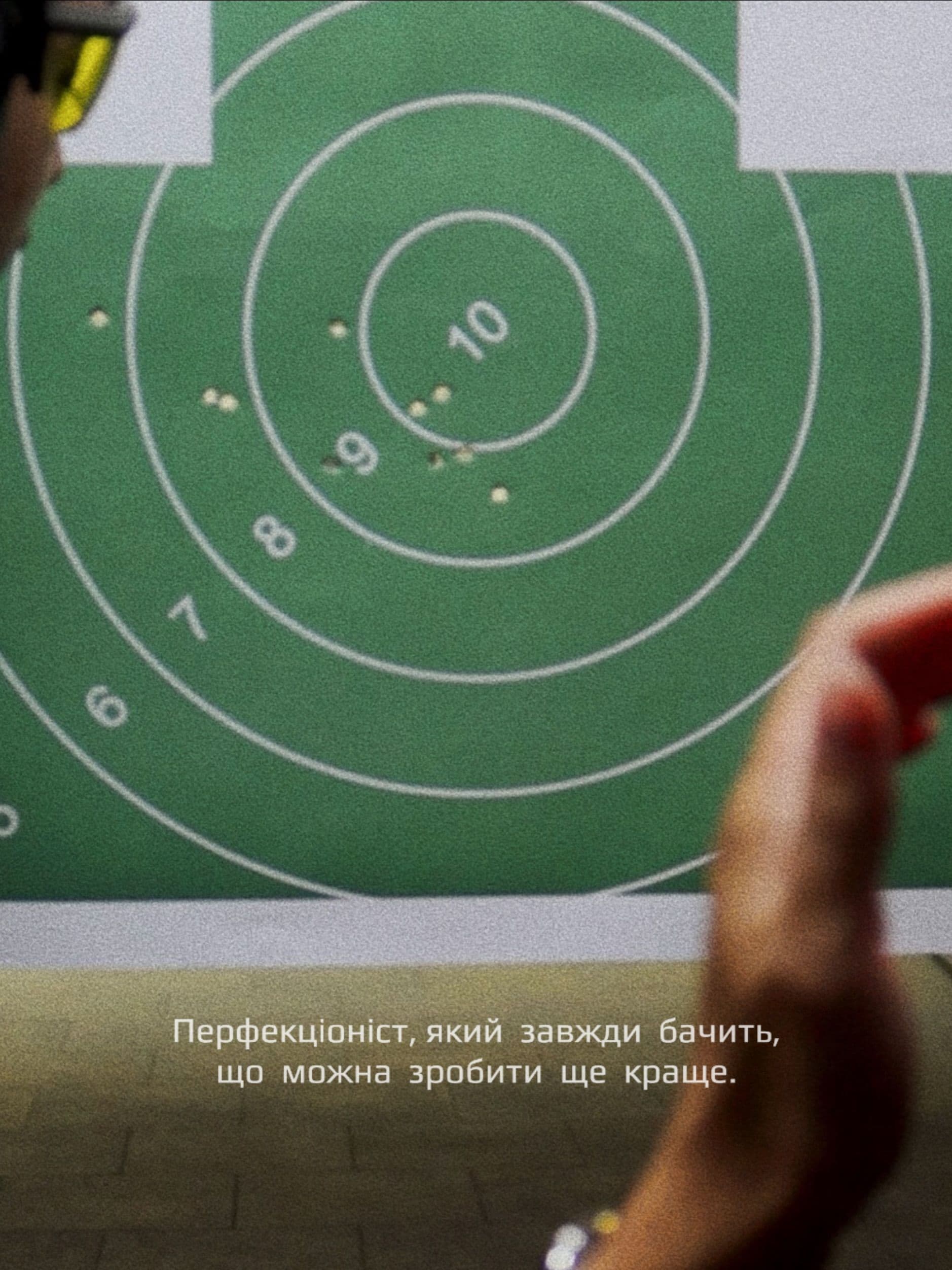
You pick up your target after a string of shots and the holes have clustered below and to the left of the centre. You held the sight steady, you aimed carefully, and the round still went elsewhere. It happens to almost everyone who is starting out, and it says nothing bad about your eyes or your hands. Here is what usually lies behind it and where to begin fixing it.
What it usually means
For a right-handed shooter, a group that lands low and to the left is a typical sign of one of two things: jerking the trigger, or reacting to recoil before it arrives. The hand tenses a moment before the shot, the muzzle dips slightly, and the round goes somewhere other than where the front sight was pointing. That is the most likely explanation, not a diagnosis: the real cause is only visible from the side, when someone watches how you move.
That is why it helps to look at the whole string, not at one hole. A single stray round proves nothing. When several shots in a row land on the same side, it is a habit, and habits can be changed.
Trigger: press smoothly, do not yank
The trigger should travel straight back, slowly, so that the moment of firing comes as a small surprise. If you wait for the shot and “help” it with a sharp movement of the finger, the sight shifts exactly when the round is leaving the barrel. Do not decide when the shot will happen: just keep the pressure going and watch the front sight. After the shot, do not let the trigger snap forward; keep the sight on the target and release the finger smoothly.
Grip: squeeze evenly
Another cause: when the trigger finger presses, the rest of the fingers squeeze along with it. The firearm shifts, and the holes shift with it. The grip should be firm but even, and the trigger finger should work separately from the rest of the hand. The instructor shows you how to hold a pistol before your first shot.
Recoil that has not happened yet
Many people brace for recoil without realising it: tensing the shoulder, squinting, pushing the firearm down. This is a normal reaction, and with practice it usually fades. In 22 LR the recoil is minimal, so it is a convenient calibre for practising a calm trigger press. Move on to 9×19 mm when your hand no longer jumps forward.
How to check yourself at your next session
- Shoot slowly, one round at a time, and keep your eyes on the front sight.
- One task per string, for example just a smooth trigger press. Several corrections at once usually get in each other’s way.
- Review after each string. Look at the group together with the instructor: at a session at Parabellum, they stand right beside you.
- No rush. If the string drifts low and left again, do not speed up: breathe out and start the next string from the first point.
If you have never been to the range, we described how a visit goes in our article on your first time at a shooting range. For a detailed technique review there is a personal coach: one-on-one training with detailed feedback, with the price on the prices page. How many shots it takes to change a habit is different for everyone, so do not rush. You can book through the form on the site.